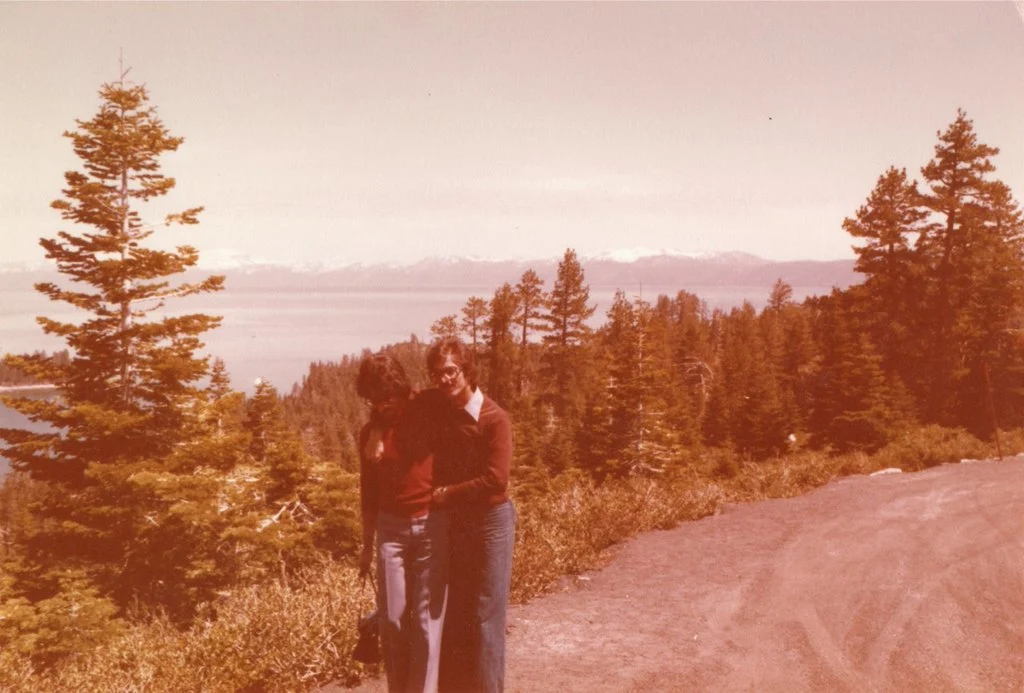
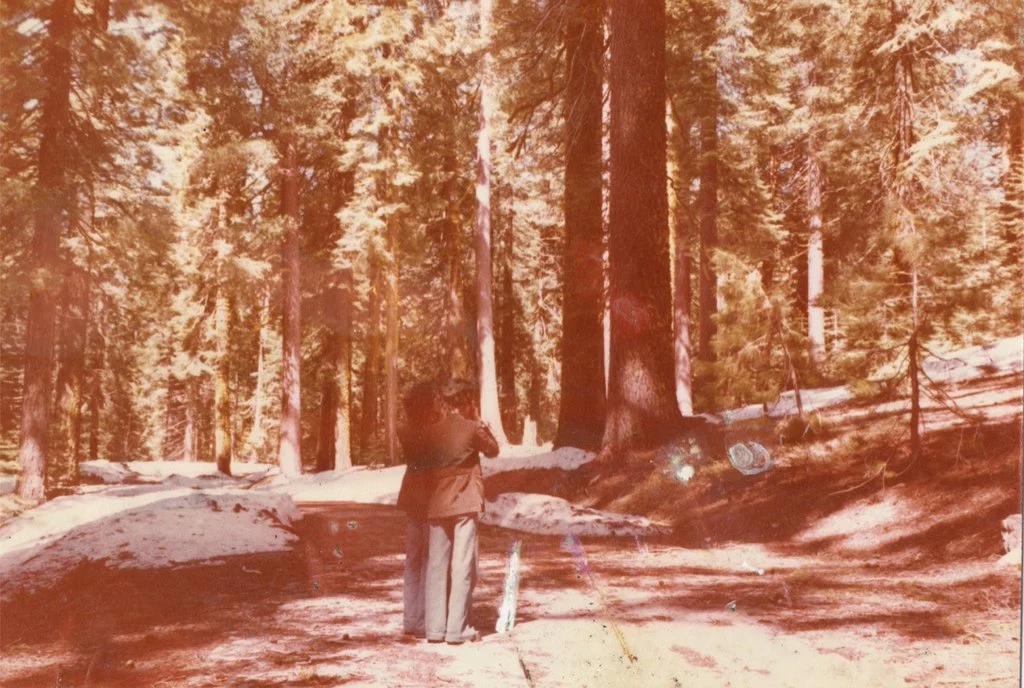
Khosrow + Koorosh, California, 1980 1978
There are very few photographs of my mother in her early twenties. She was married at 23 and had me at 25, and after that the record thickens: weddings, christenings, holidays, me. But before that there is only a thin set of prints, and I have become strangely obsessed with them.
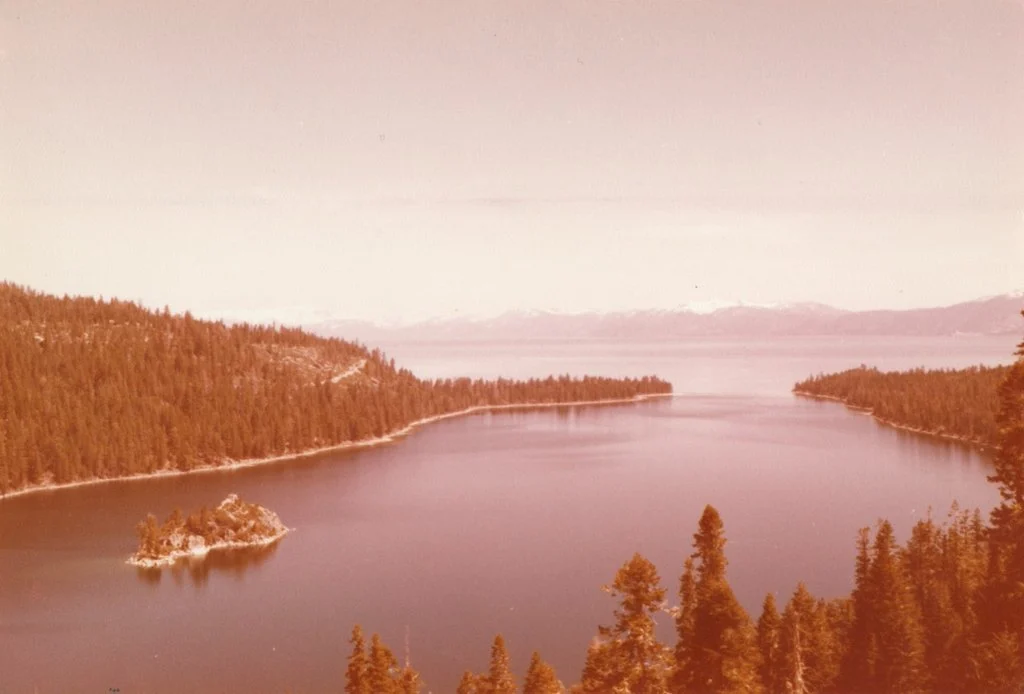
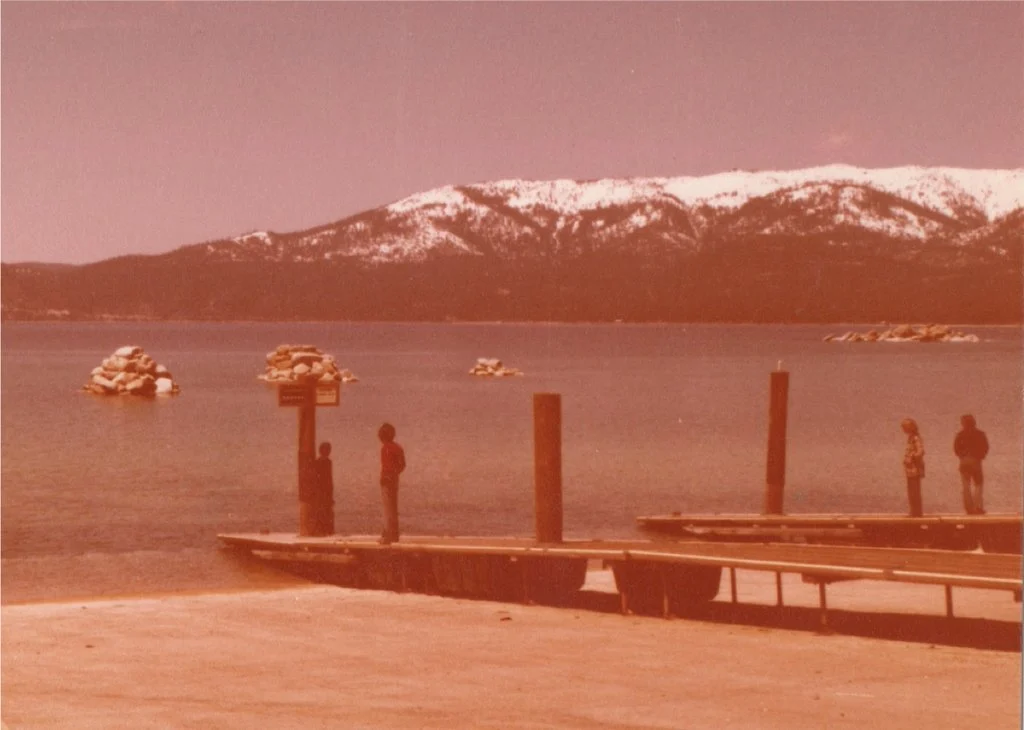
They are small, the colours gone to that reddish-orange that 1970s prints go. Lake Tahoe. A dirt track above the water with snow still on the mountains behind. Pine trees. A jetty with figures standing on it, too far away to be anyone. Then, later in the sequence, the coast, Carmel-by-the-Sea.
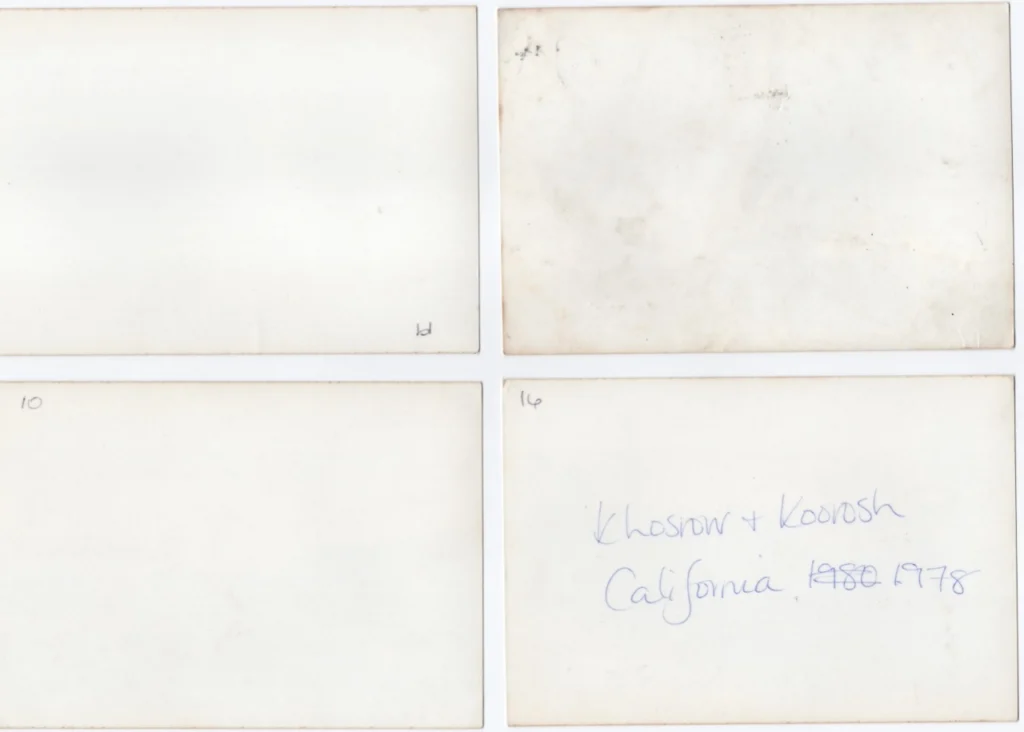
On the backs, in her handwriting, some of them are numbered. 10. 14. 16. The highest number is 26. There are nowhere near 26 prints. So there was once a set, and this is what’s left of it, or this is what she chose to keep, or this is what she chose to give away. I don’t know which.
One is captioned: Khosrow + Koorosh, California. Then a date, 1978, struck through, and 1980 written beside it. She went back to it. At some point she looked at this photograph again and decided she’d remembered the year wrong, and corrected herself. I find that harder to look at than the picture.
Khosrow and Koorosh are Persian names. They appear in three photographs. In one they stand on the track above the lake, one with his arms around the other from behind, chin almost on his shoulder. In another they are walking away from the camera into a stand of tall trees, a hand resting on a back. They look, to me, like they might have been in love. It was 1978 or 1980, and they were in California, and I have no idea who they were to my mother or what she thought of them.
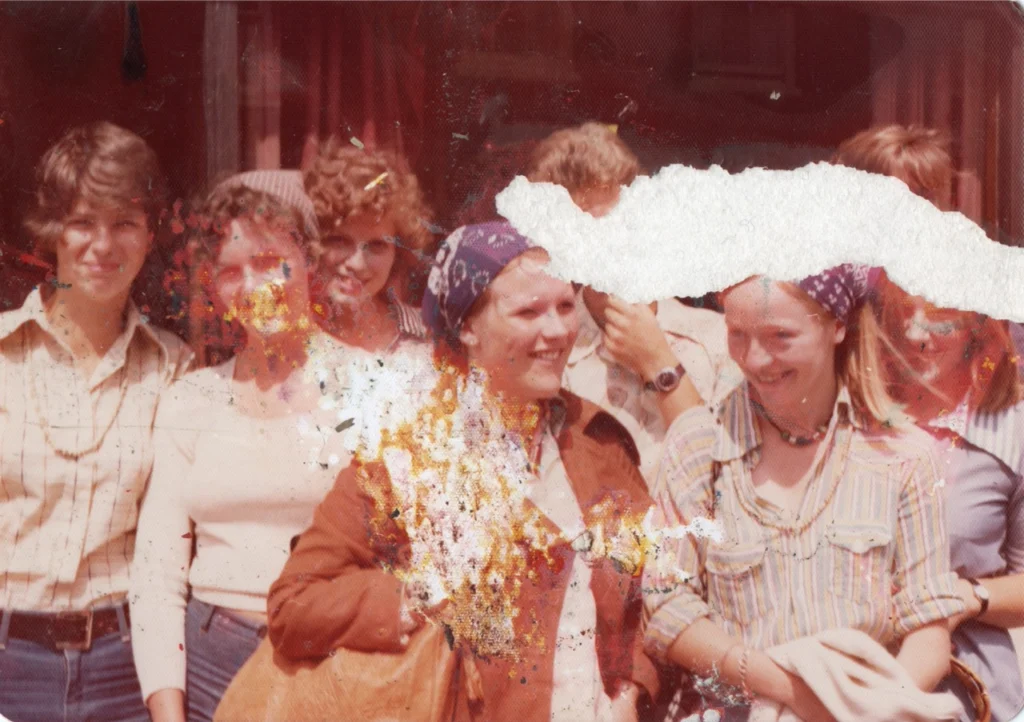
There is also Kim. My mother’s friend. She is in the pictures and she is a mystery, and nobody I can ask seems to know.
So as far as I can piece it together: my mother and her friend Kim travelled for a time in California with two Iranian men, from the mountains down to the sea, and someone took photographs, and she numbered them, and kept some, and later revised the date.
That is nearly everything I know. I know the shape of a trip and none of its content. I don’t know whose idea it was, or how they met, or what they talked about in the car, or why she stopped at this trip when she told stories about her life, if she did.
She died in July. I was holding her hand. I thought I knew her, and I did, in the way you know a parent, which is to say from one side only. These photographs are from the other side — from before I existed, when she was simply a young woman on a road above a lake with people I will never meet — and now there is no one left to ask.
They are a document of a life I’ll never really know about. I keep looking at them anyway. Maybe that’s what a photograph is for: not to tell you, but to let you keep asking.